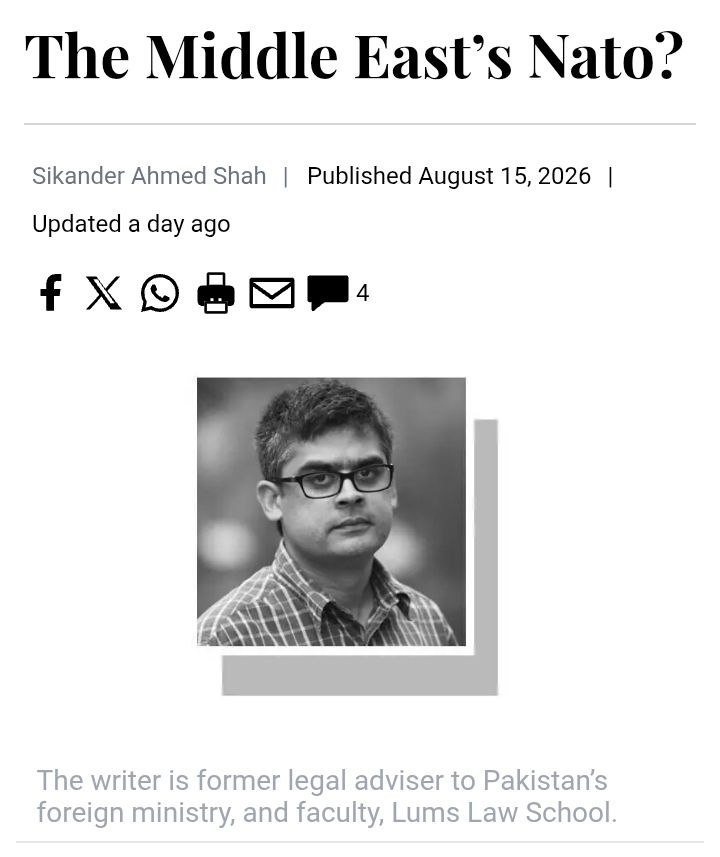
DID Press: On August 7, 2026, Pakistan, Saudi Arabia and Türkiye signed the Mecca Mutual Defense Pact. Under the agreement, an attack on any one of the members would be considered an attack on all. Dr. Ahmad Shah, a law professor at LUMS University in Lahore and a former legal adviser to Pakistan’s Foreign Ministry, describes the pact as “an attempt to create a Middle Eastern NATO” that could alter the region’s security dynamics.
Legal Basis and Implementation Challenges
According to him, the pact is based on Article 51 of the United Nations Charter, which recognizes the right of self-defense. However, its implementation faces serious ambiguities:
Pre-emptive actions: The right to self-defense is activated only after an armed attack, while claims concerning pre-emptive action have long remained a matter of dispute.
Internal and non-state threats: Becoming involved in civil wars such as those in Syria, Yemen or Iraq could draw the pact’s members into prolonged conflicts.
Geopolitical Implications for Pakistan
Dr. Ahmad Shah identifies five key challenges for Pakistan:
1. No extension of the nuclear umbrella: Islamabad has repeatedly stressed that it will not make its nuclear weapons available to others.
2. Ambiguous practical commitments: It remains unclear how Pakistan could support Türkiye against Israel or Kurdish groups, or how Saudi Arabia could assist Pakistan in the event of a confrontation with India.
3. Tensions with Iran: Given Pakistan’s shared border with Iran and its large Shiite population, any confrontation with Iran could threaten national cohesion.
4. Confrontation with Israel: The pact could potentially draw Pakistan into a direct confrontation with Israel and strengthen defense ties between India and Israel.
5. Pressure on missile and nuclear programs: Joining Middle Eastern security arrangements could increase Western scrutiny of Pakistan’s nuclear and missile capabilities.
The Big Question: Why Not China?
According to Dr. Ahmad Shah, if Pakistan is seeking mutual defense agreements, China should be its priority. The China-Pakistan Economic Corridor (CPEC), with more than $50 billion in investment, and the reported performance of Chinese equipment during the four-day war with India in May 2025 indicate that an alliance with China could both strengthen Pakistan’s deterrence against India and prevent the depletion of its armed forces in Middle Eastern conflicts.
Conclusion
The Mecca Pact could potentially function as a “Middle Eastern NATO.” However, as Dr. Ahmad Shah warns, for Pakistan it may represent a collection of geopolitical and legal risks rather than an opportunity.
The central question remains: Should Islamabad commit its military capabilities to the Middle East, or focus on China and the Asian axis to establish sustainable deterrence against India?