Why the Taliban Still Govern Afghanistan Like an Insurgent Movement
DID Press — Analysis: Five years have passed since the Taliban entered Kabul and took control of the country. Throughout these years, the general expectation and the calculations of their regional supporters were that the group would gradually transform from a “militant and insurgent movement” into an “established and accountable government.” But if we take a fair and candid look at the performance of the authorities in Kabul today, it is clear that this transition has never taken place. The Taliban continue to govern the country not through the tools of “governance and diplomacy,” but with the same logic, mindset and strict discipline of their wartime years.
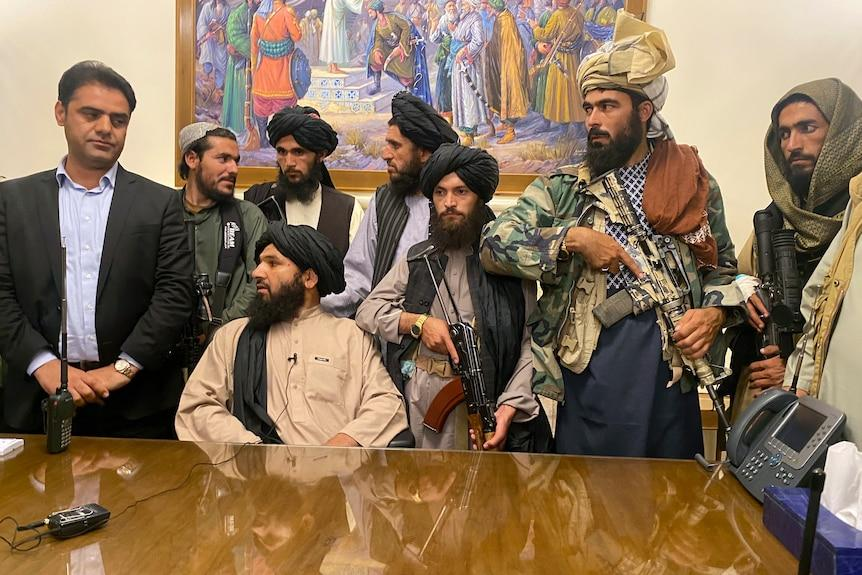
But why, despite five years in power, have the Taliban been unable or unwilling to shed their insurgent identity and adopt the behavior of a conventional government?
The first and most important reason lies in the deep conflict between ideology and statecraft. For the Taliban, political power is not the outcome of a civil process or a social contract with the people; rather, it is viewed as the product of a “years-long jihad.” From this perspective, maintaining internal cohesion and loyalty to ideological directives takes absolute precedence over providing public services, developing the economy and securing public satisfaction. Taliban leaders understand that entering the realm of “politics in its true sense” requires accepting pluralism, flexibility and accountability — concepts that have little place in their ideological structure and could potentially undermine the unity of their forces.
The second reason is the fear of weakening front-line discipline. An insurgent group survives as long as it maintains a completely vertical, command-driven and security-oriented structure. After taking control of the country, instead of dissolving or integrating their fighting forces into a national army and establishing effective bureaucratic structures, the Taliban imposed the same “commander-and-soldier” culture across all sectors of society. As a result, ministries and government institutions have become, rather than places for specialized planning and public service, headquarters for commanders who have confused state governance with military rule.
On the other hand, in foreign policy as well, the Taliban continue to follow a “zero-sum game” mentality. A conventional government understands that international relations are built on interaction, mutual concessions and adherence to global norms. Kabul, however, has continued to carry the logic of the battlefield into the diplomatic arena; the Taliban expect the international community to recognize them and provide financial assistance without requiring them to make fundamental changes in their policies, particularly regarding the rights of women and minorities. This rigid and defensive outlook is characteristic of the operating environment of guerrilla groups, rather than the conduct expected from an effective diplomatic apparatus.
The failure to distinguish between police security and social welfare should also not be overlooked. The Taliban have consistently regarded maintaining security and silence as their greatest achievement. Yet this security has been achieved through intimidation, strict control of public spaces and the elimination of opposing voices, rather than through economic development and public satisfaction.
This is precisely the same pattern used to control territories under their authority during the war, when maintaining control over geography was the primary objective and the quality of life of the population was given secondary priority.
The outcome of five years of Taliban rule shows that governing a modern, diverse and young society through wartime directives is impossible. A group that cannot distance itself from an insurgent mindset will ultimately push the country toward greater isolation and deeper structural collapse. The Taliban today stand at a historic crossroads: either they must accept that governing a country requires flexibility, public consent and engagement with the world, or they will continue to rest on the laurels of military victory and keep the country in a state of permanent quasi-war — a situation whose consequences will fall first and foremost on the long-suffering people of Afghanistan.
By Sayed Baqer Waezi — DID News Agency