UNDP Sees Solar Power as Key to Afghanistan’s Energy Future
DID Press: Afghanistan’s widening gap between electricity supply and demand has prompted the United Nations Development Programme (UNDP) to identify renewable energy, particularly solar and wind power, as one of the most practical ways for the country to reduce its dependence on imported electricity and move toward energy self-sufficiency.
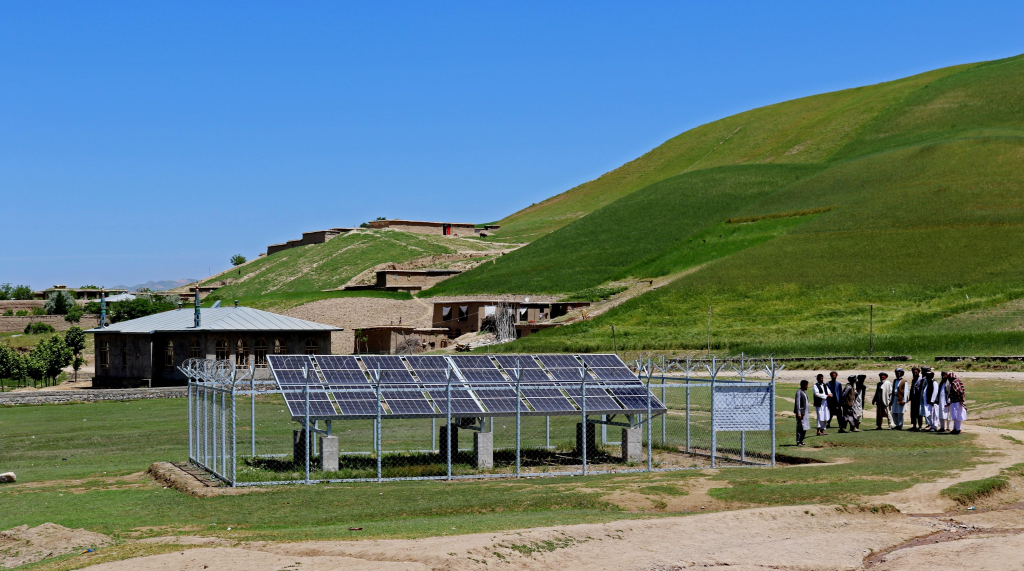
According to the UNDP assessment, Afghanistan needs around 5 gigawatts (GW) of electricity, while its current supply stands at only about 0.7 GW. Much of the country’s electricity is imported from neighboring states, leaving Afghanistan vulnerable to disruptions and increasing energy costs.
The UN says Afghanistan has significant potential for clean energy. Its overall renewable-energy potential is estimated at around 312 GW, which, with sufficient investment and infrastructure, could enable the country not only to meet domestic demand but potentially become a regional electricity exporter.
Solar power accounts for a particularly large share of this potential, with estimates putting Afghanistan’s capacity at around 222,000 megawatts.
Several parts of Afghanistan, particularly areas in the south and west, receive high levels of solar radiation, offering favorable conditions for large-scale solar power generation.
The country also has considerable wind-energy potential, estimated at around 67,000 megawatts, further highlighting the scope for renewable energy development.