DID Press: The overnight withdrawal of US forces from Bagram Air Base on July 2, 2021, marked not only the end of America’s two-decade military presence in Afghanistan, but also a turning point that exposed the failure of a costly and unsustainable strategy in the country.
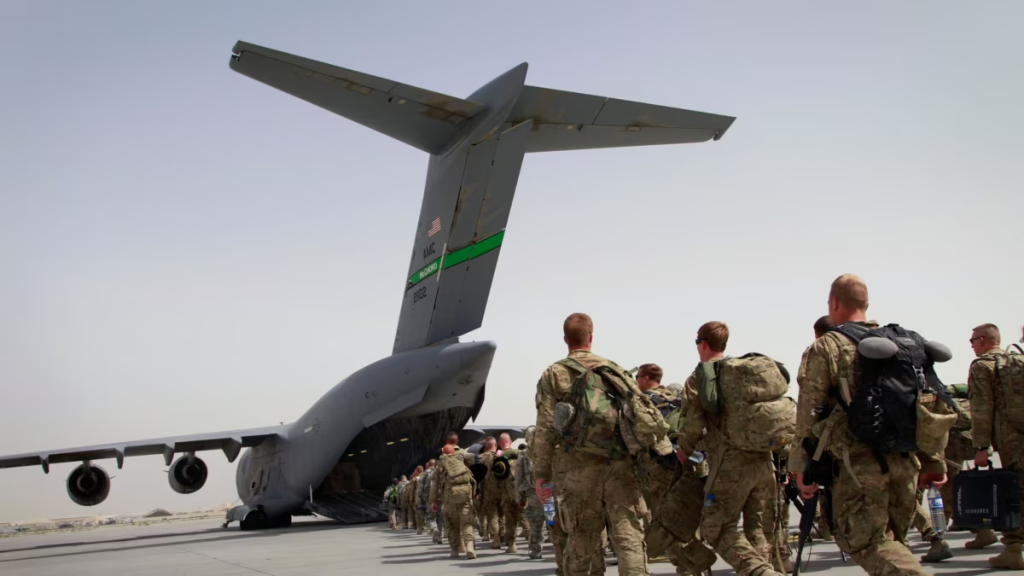
The sudden evacuation of the base—once the largest US operational hub in Central Asia—was carried out in silence and without prior notice to Afghan forces, triggering deep political, security, and psychological consequences.
Analysts argue that Washington’s decision to abandon Bagram was more than a tactical retreat; it reflected a breakdown of confidence in the very security and political system the United States had spent billions of dollars trying to build over two decades. Afghan military commanders were reportedly not informed of the exact timing of the withdrawal, a move that severely undermined the cohesion of Afghan security forces and sent a clear signal to armed opposition groups that Washington no longer had the will to sustain the Kabul government.
Strategically, critics say the US mistake lay in pursuing nation-building goals disconnected from Afghanistan’s complex historical, ethnic, tribal, and economic realities. Institutions built with foreign assistance remained heavily dependent on external funding and quickly collapsed once that support was removed.
The uncoordinated exit from Bagram also highlighted failures in crisis management. Despite US claims that Afghan forces were capable of independent defense, the rapid fall of provinces began within weeks of the base’s evacuation, culminating in the collapse of the Republic government. The episode demonstrated that military training and equipment alone cannot ensure stability without political legitimacy, national cohesion, and economic self-reliance.
Regionally, the withdrawal reshaped the balance of power, creating a vacuum that intensified competition among regional actors for influence in Afghanistan. It also heightened concerns among neighboring states over terrorism, drug trafficking, migration flows, and border instability—long-term consequences that continue to affect regional security.
Internationally, Bagram became a symbol of declining US strategic credibility. Allies questioned Washington’s reliability after witnessing the abrupt end of a 20-year mission and the rapid disintegration of the Afghan government. Images of the chaotic withdrawal significantly damaged the perception of US foreign policy commitment.
However, analysts also emphasize that Afghanistan’s crisis cannot be attributed solely to the United States. Deep-rooted internal weaknesses—including corruption, political fragmentation, economic dependence, and failure of national consensus among elites—played a central role in the collapse. The US withdrawal merely accelerated an already ongoing process of systemic decay.
Years later, Bagram remains a defining case study in international politics, illustrating that military power alone cannot replace political legitimacy or effective governance. The experience underscores the limits of external nation-building without a deep understanding of local social and cultural structures.
Today, the anniversary of the US withdrawal from Bagram serves as a reminder of one of the most consequential geopolitical shifts of recent decades—an event that reshaped Afghanistan and raised broader questions about the effectiveness of long-term American strategic commitments worldwide.
By Rahel Mousavi | DID News Agency