US Jewish Community Faces New Debate Over Israel and Gaza Policies
DID Press: A new survey by the Associated Press-NORC Center for Public Affairs Research shows growing divisions within the American Jewish community over Israel, the Gaza war, and the meaning of Jewish identity, challenging the perception of a unified stance toward Tel Aviv.
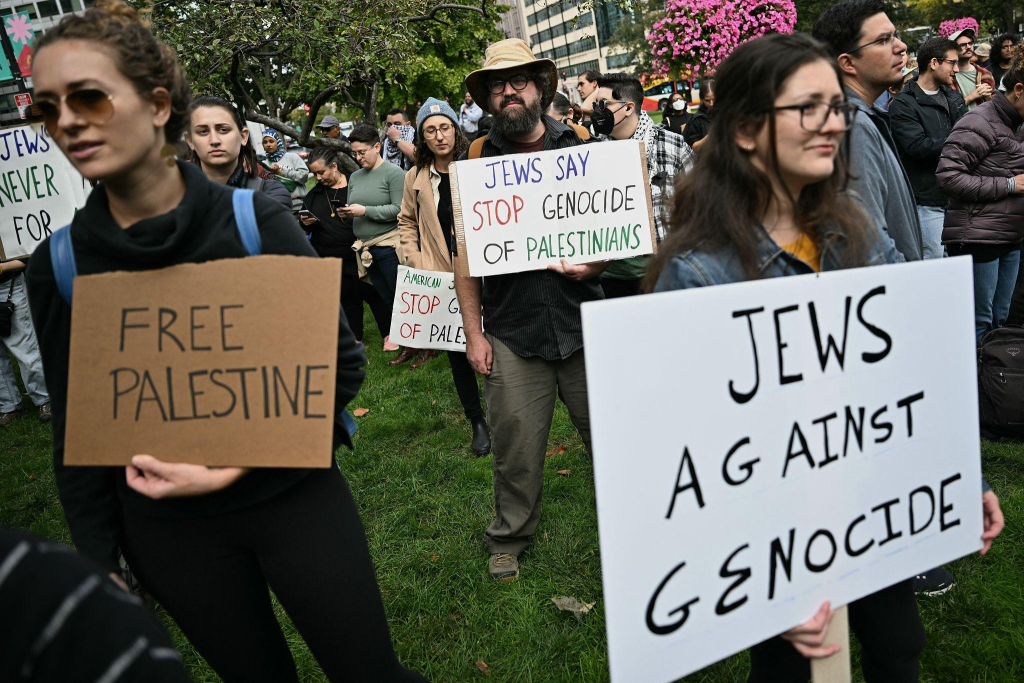
The survey, conducted among 3,040 U.S. adults, including 1,022 Jewish respondents, indicates a widening gap between religious and secular Jews regarding Israel’s military actions in Gaza and broader political issues.
The findings show that many religious Jews continue to view Israel as a central part of their identity, while secular and non-religious Jews are more critical of Israeli policies in Gaza, with some describing the actions as “genocide,” a term used by some human rights groups and rejected by Israel and the U.S. government.
According to the survey, around half of religious Jewish respondents consider Israel’s military campaign in Gaza justified, while a significant portion also expressed concerns over allegations of severe violations. Among non-religious Jews, criticism of Israel’s actions was considerably higher, with fewer supporting the military campaign.
The divide is also reflected in emotional ties to Israel. A large majority of non-religious Jewish respondents said they feel little or no connection to Israel, while religious Jews are more likely to consider Israel an important element of their identity.
Political differences remain significant as well. While many American Jews identify as Democrats, attitudes toward Zionism vary widely, with religious Jews showing stronger identification with the term compared with secular Jews.
The survey also found that disagreements over Israel have affected personal relationships, with many respondents reporting tensions with family members, friends, or others since the October 7 attacks and the subsequent Gaza war.
The AP-NORC survey, which carries a margin of error of 2.8 percent for the overall sample and 5 percent for the Jewish sample, suggests that views within the U.S. Jewish community are becoming increasingly diverse and divided over questions of religion, politics, and Israel.
Source: Associated Press