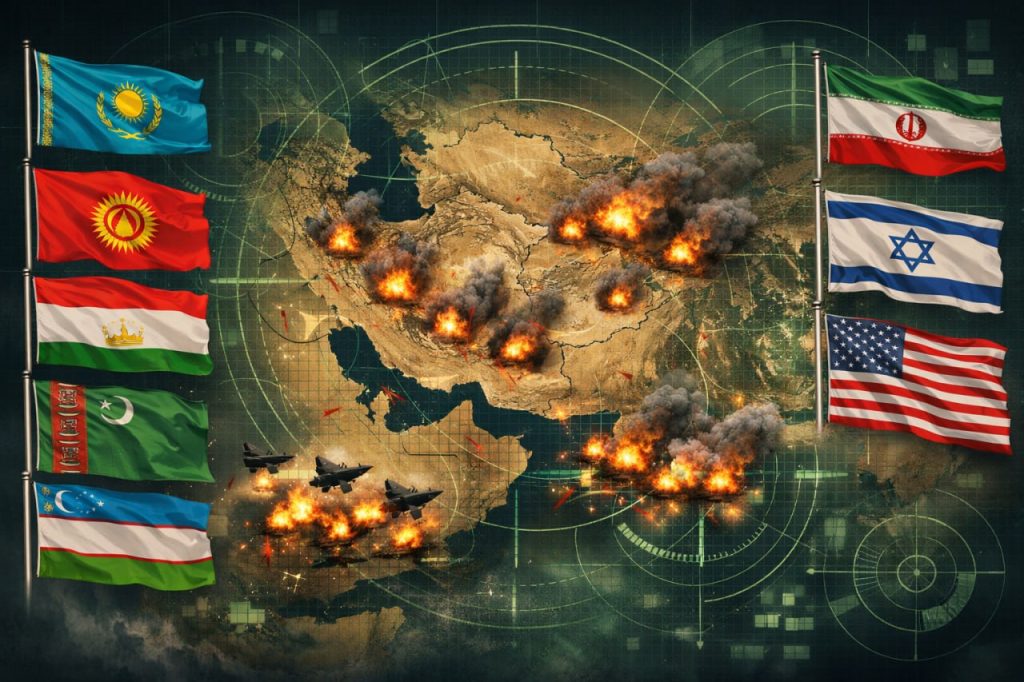
DID Press: Ongoing direct conflict involving Iran, the United States, and Israel is increasingly viewed as more than a security crisis, emerging instead as a turning point in how the world defines the concept of a superpower. Reciprocal strikes, calculated responses, and Iran’s demonstrated missile capabilities have led many governments and analysts to argue that the era of absolute U.S. unilateral dominance is being seriously challenged. The geopolitical significance of this shift is amplified by the return to power of Donald Trump, widely associated with assertive American nationalism and strategic competition.
Erosion of Hegemony and Shifting Global Perceptions
For decades, U.S. military power served as a central pillar of the international order. However, recent operations by the Islamic Revolutionary Guard Corps have fueled debate about the vulnerability of even the most advanced defense systems when confronted by regional actors with indigenous capabilities and networked strategies. Analysts note that the perception shift itself may be more consequential than the battlefield outcomes, as it reshapes how states assess the limits of U.S. power and reconsider their own strategic calculations.
When countries begin to recognize that even a superpower has constraints, their behavior in foreign policy, alliance-building, and balancing strategies tends to evolve. This dynamic is often described by scholars as the early stage of practical multipolarity—a transition from a single dominant power toward a more distributed global system.
Geopolitical Implications for the International Order
This evolving perception is expected to translate into structural changes in global power alignment. States that previously operated under the shadow of U.S. dominance are becoming more assertive and seeking greater strategic autonomy. At the same time, emerging powers—from China and Russia to influential regional actors—are viewing the current conflict as an opportunity to redefine their global roles. In such an environment, any successful challenge to traditional power structures is widely interpreted as evidence of a gradual shift away from a unipolar world order.
Iran’s Role and the State-Centric Order
Within this broader context, actions taken by Iran are framed by some analysts as extending beyond national defense to encompass the protection of state sovereignty and the principles of international law. In a world where unilateral military interventions remain contentious, resistance by targeted states can carry symbolic significance that extends beyond regional disputes, reinforcing norms related to sovereignty and deterrence.
Iran’s reliance on deterrence capabilities and domestic defense infrastructure has been cited as an example of how regional powers can impose higher strategic costs on adversaries. This message, observers argue, resonates not only within the Middle East but across the global system, potentially influencing post-conflict diplomatic alignments and security doctrines.
Future of the Global Order: From Perception to Reality
Shifts in perception often precede structural transformation. As global views of U.S. power evolve, state behavior may gradually change—leading to new alliances, increased strategic independence, reduced reliance on Washington, and stronger regional actors. In this scenario, Iran’s role as a state capable of exposing the operational limits of a major power could become more prominent in shaping future geopolitical dynamics.
The conflict may ultimately accelerate the transition toward a more multipolar international system, where influence is distributed among several major and regional powers rather than concentrated in a single dominant state.