DID Press: Leaked confidential documents from US Embassy in Baku, published by Politico, indicate that Washington’s conflict with Tehran has significantly weakened the United States’ standing in public opinion in the Azerbaijan and stalled the previously growing trajectory of bilateral relations. The reports reflect rising concern among American diplomats about the long-term consequences of the crisis and the potential loss of recent U.S. gains in the Caucasus region.
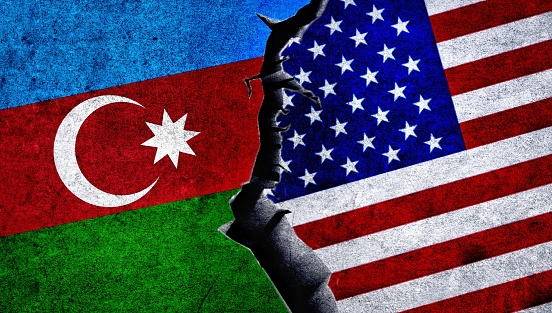
Sharp Decline in America’s Image Among Azerbaijani Public
According to the leaked reports, public perception of the United States in Azerbaijan has “noticeably deteriorated.” The U.S. Embassy warned that criticism of Washington has spread across media and elite circles, while actors aligned with Iran have taken the initiative on social media, leaving American diplomacy struggling to counter prevailing narratives.
Because Azerbaijani society is heavily exposed to regional media, the shift in public sentiment has occurred more rapidly than expected.
Stagnation in Washington–Baku Relations
Diplomatic cables from Baku described relations between the United States and Azerbaijan as being in a state of “pause and stagnation.” Before the war, cooperation had been strengthening, but normalization efforts following peace talks between Azerbaijan and Armenia have since been disrupted. Distrust toward U.S. intentions in the Caucasus has increased, while security concerns stemming from tensions between Iran and the United States have cast a shadow over Baku’s political and media environment.
Noticeable Shift in Azerbaijani Media Narratives
The documents show that media outlets close to the Azerbaijani government moved through two distinct phases:
Phase One (after the February 28 attack):
Efforts to maintain neutrality, with some developments even reinforcing anti-Iran sentiment.
Phase Two (from early April):
A clear change in tone centered on narratives claiming that the United States and Israel were the primary drivers of the conflict, that Washington lacked an exit strategy, and that crisis management had slipped out of U.S. control.
Despite this shift, secular media in Baku remain critical of Iran, although dissatisfaction with the United States has reached unprecedented levels.
Threat to Washington’s Strategic Gains in the Caucasus
American diplomats warned that continuation of the current trend could weaken the United States’ role as a mediator in the Azerbaijan–Armenia dispute, undermine trust built after peace negotiations, and push Baku toward greater strategic independence from Washington.
Structural Challenges in the Information Domain
The leaked materials indicate that internal restrictions within the United States Department of State have contributed to Washington’s difficulties in shaping public opinion. Embassies were reportedly barred from producing independent content about the war and limited to reposting official messaging, while Iran’s coordinated media network maintained the initiative in the information sphere.
Internal Tensions Within U.S. Diplomacy
The cables also revealed a tense atmosphere within the U.S. diplomatic establishment. Many diplomats were reportedly hesitant to speak candidly, fearing political repercussions, leading to overly cautious reporting that limited effective crisis response.
Conclusion
The leaked documents suggest that the U.S. conflict with Iran has, within a short period, weakened Washington’s standing in Azerbaijani public opinion, stalled bilateral relations, shifted the media climate against the United States, and reduced Washington’s capacity to shape narratives in the region. While the government of Azerbaijan continues to maintain an independent and sometimes critical stance toward Iran, skepticism toward the United States has reached its highest level in recent years—potentially reshaping U.S. influence across the Caucasus.